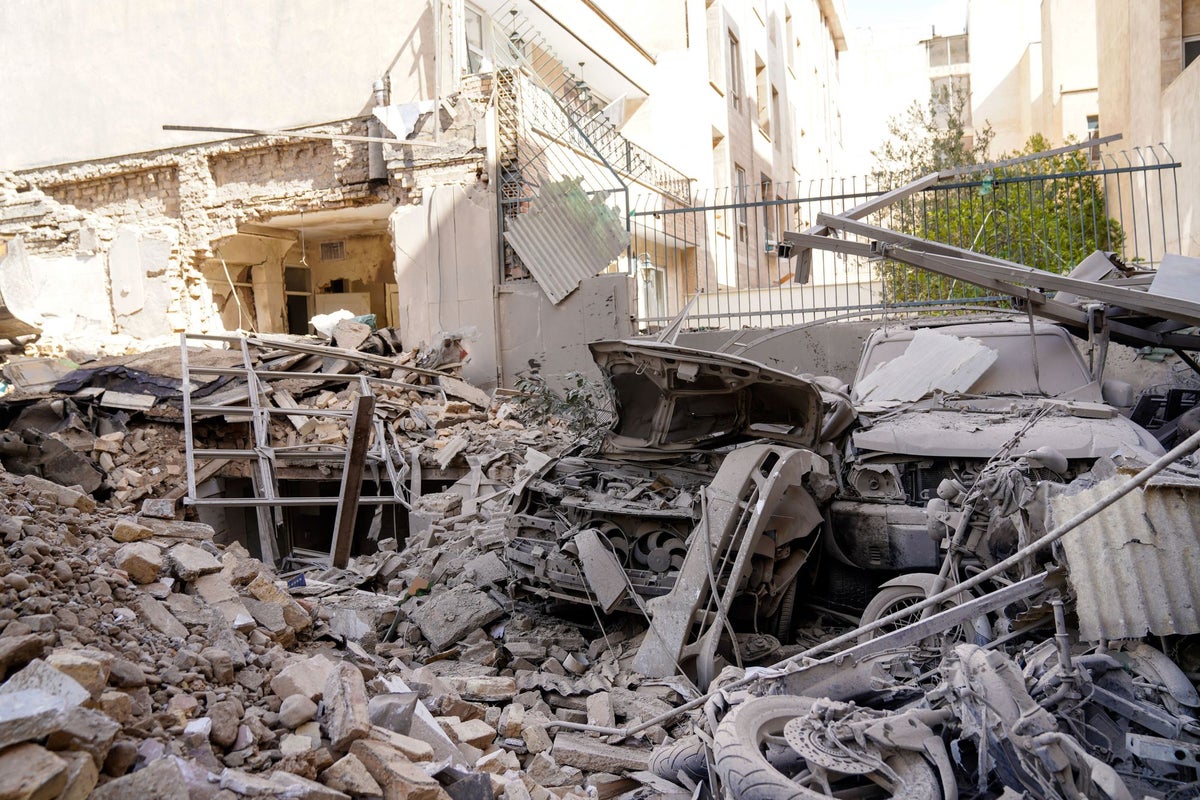
The geopolitical landscape of the Middle East has been irrevocably altered following an unprecedented wave of massive US-Israel strikes on Iran, culminating in the reported death of Supreme Leader Ayatollah Ali Khamenei. This series of coordinated military actions, dubbed "Operation Epic Fury" by American forces, marks a dramatic escalation in the long-standing shadow war, pushing the region to the precipice of a full-scale conflict. Beyond the immediate devastation and the staggering casualty count among Iran's top leadership, the most pressing question now looms large: What comes next for Iran, the region, and the world?
The Unprecedented Scale of "Operation Epic Fury"
The scope and intensity of the recent US-Israeli strikes against Iran are truly without precedent. American and Israeli militaries have confirmed hitting nearly 2,000 targets across the country, fundamentally reshaping Iran's strategic capabilities and government infrastructure. Within the initial 48 hours alone, over 1,250 targets were struck, demonstrating a rapid and overwhelming show of force.
The stated objective of "Operation Epic Fury," as articulated by U.S. Central Command (CENTCOM), is to "dismantle the Iranian regime's security apparatus" and prioritize locations posing an "imminent threat." This includes a deliberate and strategic focus on critical nerve centers of the Iranian state:
- Government and Military Sites: Extensive damage has been reported to various government installations. The Israel Defense Forces (IDF) specifically noted striking an additional 600 "terrorist infrastructures of the Iranian regime," highlighting the broad definition of targets.
- Ballistic Missile Program: A significant blow was delivered to Iran's ballistic missile program, a cornerstone of its defensive and offensive capabilities, aiming to degrade its ability to project power.
- Islamic Revolutionary Guard Corps (IRGC) Headquarters: Among the most crucial targets were the very heart of the IRGC. This included the IRGC joint headquarters in Tehran, the IRGC Aerospace Forces headquarters, intelligence headquarters, and various IRGC Air Force command centers. Such strikes aim to decapitate the command and control structure of Iran's most powerful military and political force.
The humanitarian organization, the Iranian Red Crescent Society, has indicated that over 130 cities across Iran have been impacted, underscoring the widespread nature of the assault. President Donald Trump, in his initial public remarks, cautioned that the operation could last "up to four to five weeks," though he added, "We have capability to go far longer than that," signaling a sustained and determined effort to neutralize perceived threats from Tehran. For a deeper dive into the specifics of the targeted sites and the operational goals, you can read more about Operation Epic Fury: US-Israel Strikes Target Iran's Military & Leadership.
A New Era: The Fallout from Khamenei's Demise
The most shocking and strategically significant outcome of these strikes is undoubtedly the confirmed death of Ayatollah Ali Khamenei, Iran's Supreme Leader. State TV in Iran and President Trump both confirmed that Khamenei was killed in his office at his compound in northern Tehran early Sunday. Israeli Air Force jets, relying on meticulous IDF intelligence and months of CIA tracking of his routines, executed a "precise, large-scale operation" that struck him while he was reportedly meeting with other top officials. This targeted assassination, along with the reported killing of 49 other Iranian senior leaders, represents an unprecedented decapitation strike against the core of the Iranian regime.
The killing of Khamenei plunges Iran into an immediate and profound leadership vacuum. As the ultimate authority in Iran, his presence guaranteed a certain degree of continuity and direction for the Islamic Republic. His death removes the symbolic and actual head of both the state and the religious establishment, opening up a Pandora's Box of political uncertainties.
The Succession Crisis and Internal Dynamics
The succession process for the Supreme Leader in Iran is constitutionally outlined but often fraught with internal politicking and power struggles. The Assembly of Experts, a body of 88 high-ranking clerics, is tasked with selecting a new leader. However, the current circumstances are far from ordinary, and a smooth transition is highly improbable given the context of massive US-Israel strikes on Iran.
- Immediate Power Vacuum: The sudden removal of the Supreme Leader, especially under such hostile conditions, creates an immediate void that hardline factions, the IRGC, and other political elites will vie to fill.
- Potential for Internal Strife: Without Khamenei's unifying (albeit iron-fisted) authority, long-simmering rivalries within the clerical establishment and the IRGC could erupt into open power struggles. This could lead to intense factionalism, potentially destabilizing the entire political system.
- IRGC's Enhanced Role: In the absence of a clear spiritual and political leader, the IRGC, already a dominant force, could assume an even more prominent role in maintaining order and influencing the succession. Their command centers were hit, but their operational capacity and political sway remain immense. They might seek to install a leader who aligns closely with their hardline ideology.
- Public Reaction: The reaction of the Iranian populace remains a critical unknown. While state media will undoubtedly frame Khamenei as a martyr, the unprecedented nature of the strikes could fuel different sentiments among various segments of society, from rallying around the flag to intensified calls for change.
The succession crisis will dictate Iran's future trajectory, potentially leading to a more radicalized leadership, a prolonged period of internal instability, or even an unlikely, yet not impossible, shift towards reform, depending on who ultimately consolidates power.
Iran's Retaliatory Arsenal: The Fattah-2 and Beyond
Amidst the widespread devastation wrought by the US-Israeli strikes, Iran has made significant claims regarding its own military capabilities. Tehran has stated that it deployed its advanced “Fattah-2” hypersonic missile during ongoing counterattacks against Israeli and US-linked targets. This declaration, if true, signals a major escalation in Iran's retaliatory campaign and frames the launch as a potent display of strategic deterrence and technological strength.
Hypersonic missiles, capable of traveling at speeds greater than Mach 5 and maneuvering in flight, pose a significant challenge to existing air defense systems. Iran's assertion of using the Fattah-2 suggests a commitment to utilizing its most advanced weaponry in direct response to the massive US-Israel strikes on Iran. This raises critical questions about the effectiveness of these weapons and their potential impact on the conflict's trajectory. For more details on Iran's advanced missile capabilities, see Iran's Hypersonic Threat: Fattah-2 Deployed Amid US-Israel Strikes.
The Future of Iran's Military Doctrine
Post-Khamenei and following such extensive damage to its military infrastructure, Iran's military doctrine is likely to undergo a significant transformation. The regime's priority will be to demonstrate resilience and retaliate in a way that preserves its deterrent capability, even with the central leadership fragmented.
- Asymmetrical Warfare: Iran is adept at asymmetrical warfare. With its conventional forces and strategic assets heavily targeted, it might lean more heavily on cyber warfare, proxy groups across the Middle East (Hezbollah, Houthis, various Iraqi militias), and targeted attacks on maritime shipping or regional energy infrastructure.
- Re-evaluation of Deterrence: The perceived failure of traditional deterrence mechanisms against these massive strikes will force Iran to reassess its strategic calculations. The deployment of the Fattah-2, if confirmed as successful, could be seen as an attempt to re-establish a credible threat.
- Cyber Attacks: Expect a significant increase in Iranian-backed cyber attacks against US, Israeli, and allied targets, aimed at disrupting critical infrastructure and retaliating in a realm where physical superiority is less relevant.
- Nuclear Ambitions: With its leadership decimated and conventional capabilities degraded, the temptation to accelerate its nuclear program, even clandestine, could intensify as the ultimate guarantor of survival for the regime.
The coming weeks will reveal how Iran, under new and potentially fractured leadership, chooses to respond to these unprecedented 'iran attaques israël'. The nature of its retaliation will define the next phase of this perilous conflict.
Regional and Global Repercussions
The ripple effects of these massive US-Israel strikes on Iran will extend far beyond its borders, destabilizing an already volatile Middle East and challenging the global order.
- Heightened Regional Tensions: Proxy groups allied with Iran across the region are likely to be activated, leading to increased attacks against US interests, Israel, and Saudi Arabia/UAE. This could ignite wider regional conflicts involving various state and non-state actors.
- Oil Market Volatility: The prospect of a prolonged conflict involving a major oil producer like Iran will inevitably send shockwaves through global energy markets, leading to price spikes and economic uncertainty.
- Humanitarian Crisis: The extensive strikes and the potential for prolonged conflict could exacerbate existing humanitarian crises in the region and create new ones within Iran.
- International Diplomacy Under Strain: Major global powers like Russia, China, and European nations will face immense pressure to mediate, condemn, or support one side, further straining international relations. Calls for de-escalation will be challenged by the reality of ongoing military operations.
The Role of International Actors
The world's response will be critical. Russia and China, often allies of Iran, will likely condemn the strikes while carefully navigating their own strategic interests. European powers will primarily call for de-escalation and humanitarian aid, attempting to prevent a broader war. However, the depth of the US-Israel strikes on Iran, particularly the targeting of Khamenei, has set a new precedent that no amount of diplomatic rhetoric can easily undo. The potential for a wider, more devastating regional conflict is now a tangible and immediate threat.
The death of Ali Khamenei following these extensive 'iran attaques israël' marks a tectonic shift in Middle Eastern geopolitics. The aftermath will be defined by a turbulent succession process within Iran, a re-evaluation of its military doctrine, and a highly volatile regional environment. The world watches with bated breath, as the consequences of these unprecedented strikes on Iran unfold, forever changing the course of history in the region and beyond.